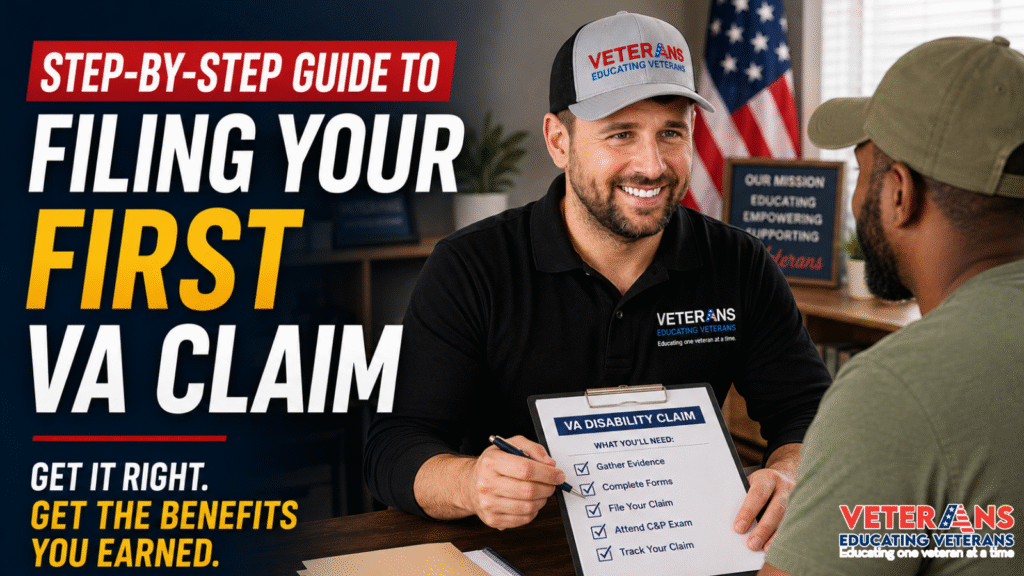
Filing Your First VA Disability Claim Starts With the Right Evidence
Filing your first VA disability claim can feel like stepping into a system built in another language. Forms, medical records, service treatment records, C&P exams, nexus letters, effective dates, combined ratings — it is a lot to absorb when you are just trying to get the benefits you earned.
The good news: a strong first claim follows a clear process. The VA is looking for three core things: a current diagnosed condition, an in-service event or exposure, and a medical link between the two. If you understand those three requirements before you file, you give yourself a much better shot at avoiding delays, low ratings, or denials.
This guide walks you through the VA disability claim process step by step, from checking eligibility to submitting evidence, preparing for the Compensation and Pension exam, and reviewing your decision letter.
Who Should File a VA Disability Claim?
You should consider filing a VA disability claim if you have a current physical or mental health condition that may be connected to your military service. That includes conditions that started during service, conditions caused by service, and conditions that got worse because of service.
Common first-time VA claim conditions include:
- Back, neck, knee, shoulder, hip, or ankle injuries
- Tinnitus or hearing loss
- PTSD, depression, anxiety, or other mental health conditions
- Migraines or chronic headaches
- Sleep apnea and other sleep disorders
- Respiratory conditions tied to burn pits, toxic exposure, or other service exposures
- Scars, skin conditions, digestive issues, or chronic pain conditions
You do not need to be at the point of total disability to file. Even a 0% service connection can matter because it establishes the condition as service-connected and may support future increases or secondary service connection claims.
Step 1: Confirm Basic Eligibility
Before building the claim, confirm that you meet the basic requirements for VA disability compensation. In general, veterans may qualify if they have a current disability connected to their military service. Certain disabilities related to active duty for training or inactive duty training may also qualify, depending on the circumstances.
You will typically need:
- Military service documentation, usually your DD214 or separation paperwork
- A current disability or medical condition, ideally documented by a medical provider
- A connection to service, such as an injury, event, exposure, aggravation, or documented symptoms during service
If your discharge status, service period, or records are complicated, do not guess. Get your records organized first so you know what the VA will see when it reviews your claim.
Step 2: List Every Condition You May Claim
Do not start by asking, “What will the VA approve?” Start by making a complete list of the conditions affecting your life. Then separate that list into conditions with strong evidence, conditions that need more documentation, and conditions that may be secondary to another disability.
For each condition, write down:
- When symptoms started
- What happened during service that may have caused or aggravated the condition
- Whether the condition was documented in service treatment records
- Whether you have a current diagnosis
- How the condition affects work, sleep, relationships, mobility, concentration, or daily life
This step matters because veterans often underclaim. They file for one obvious condition, then miss related conditions that may be just as important. For example, chronic back pain may create radiculopathy, altered gait, hip problems, or depression. Tinnitus may contribute to sleep problems, headaches, anxiety, or depression.
Step 3: Gather Your Service and Medical Records
The strongest claims are built before they are filed. The VA can request federal records, but you should not rely on the VA to find and interpret everything perfectly. Organizing your evidence up front helps the rater understand your claim and reduces the chance of missing documentation.
Service Records to Collect
- DD214 or separation paperwork
- Service treatment records
- Deployment records
- Line of duty reports, incident reports, or accident reports
- Performance records showing changes after injury or symptoms
- Personnel records supporting location-based exposures
Medical Records to Collect
- VA treatment records
- Private doctor records
- Hospital or urgent care records
- Imaging reports, lab results, and specialist notes
- Mental health records, if applicable
- Medication lists and treatment history
If you do not have every record yet, you can still start organizing what you have. But the more complete the evidence, the easier it is to show the VA the full picture.
Step 4: Understand the Three Elements of Service Connection
Most first-time claims succeed or fail on service connection. The VA generally needs three elements before it grants a disability:
- A current diagnosis. You need a current condition, not just a past injury that fully resolved.
- An in-service event, injury, illness, or exposure. This could be a documented injury, hazardous exposure, traumatic event, training accident, or symptoms that began during service.
- A nexus. A medical link connecting the current condition to the in-service event, injury, illness, or exposure.
Think of these as a chain. If one link is missing, the VA may deny the claim. A veteran can have a real diagnosis and a real in-service event, but still lose if the medical nexus is weak or missing.
Step 5: Decide Whether You Need a Nexus Letter
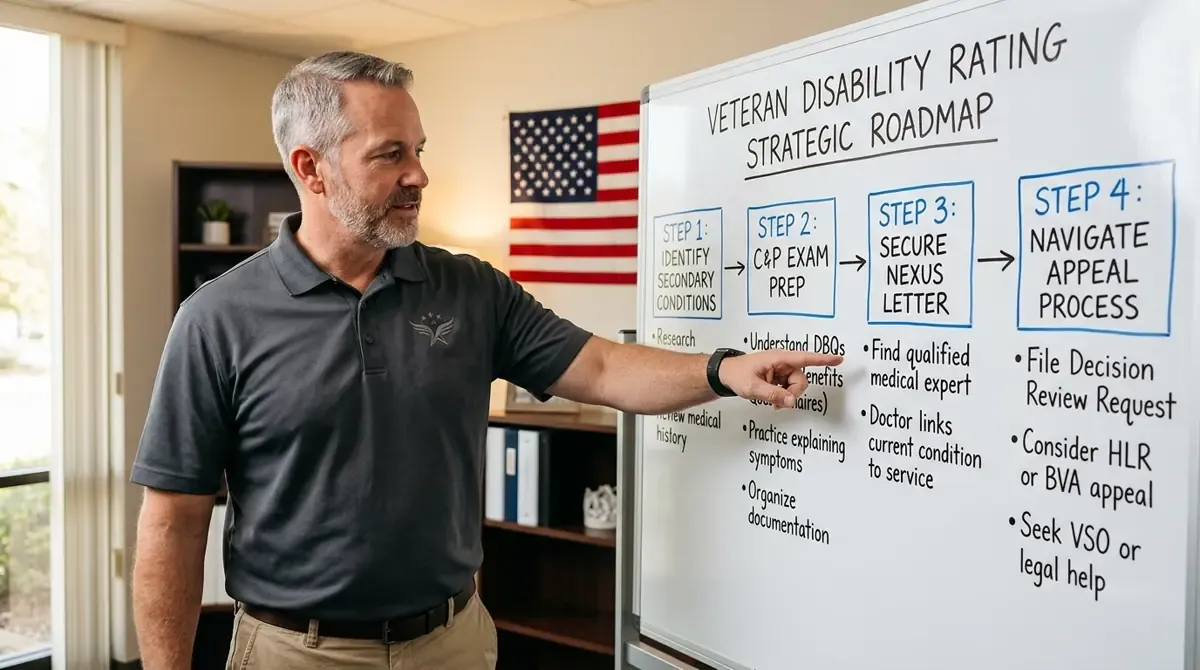
A nexus letter is a medical opinion that explains how your current condition is connected to your military service. Not every claim needs a privately obtained nexus letter, but many denials happen because the evidence does not clearly connect the dots.
A strong nexus letter should:
- Be written by a qualified medical professional
- Review your relevant service and medical records
- Use the VA standard, such as “at least as likely as not”
- Explain the medical reasoning, not just state a conclusion
- Address known risk factors, timelines, and symptom history
For many presumptive conditions, the VA presumes the service connection once the applicable eligibility requirements are met. For many other claims, especially older injuries, mental health claims, and secondary conditions, a nexus letter can be the difference between approval and denial.
Step 6: File the Claim Through the Right Channel
Most first-time disability claims can be filed online at VA.gov. You can also file by mail, in person at a VA regional office. The key is making sure the claim is complete, accurate, and supported by evidence.
Common VA Forms for First-Time Claims
- VA Form 21-526EZ — Application for Disability Compensation and Related Compensation Benefits
- VA Form 21-4138 — Statement in Support of Claim, often used for personal statements
- VA Form 21-10210 — Lay/Witness Statement, often used for buddy statements
- VA Form 21-4142 — Authorization for the VA to request private medical records
When describing each condition, be specific. Instead of listing only “back pain,” identify the diagnosed condition if you have one, such as lumbar strain, degenerative disc disease, or radiculopathy. Instead of listing only “mental health,” identify PTSD, depression, anxiety, or adjustment disorder if diagnosed.
Step 7: Write a Clear Personal Statement
Your personal statement helps the VA understand what happened, when symptoms started, and how the condition affects your daily life. Keep it direct, factual, and organized.
A useful personal statement usually includes:
- What happened during service
- When symptoms began
- How symptoms continued or worsened after service
- Current treatment, medications, or limitations
- How the condition affects work, family life, sleep, mobility, or daily tasks
Do not exaggerate. Do not minimize. Veterans are often trained to push through pain and say they are fine. In a VA claim, that habit can hurt you. The VA needs an accurate picture of how your condition affects you, including your symptoms, flare-ups, and real-world limitations
Step 8: Use Buddy Statements to Support the Claim
Buddy statements are written statements from people who saw the event, noticed symptoms during service, or observed how your condition affects you now. They can come from fellow service members, spouses, family members, friends, coworkers, or supervisors.
Good buddy statements are specific. “He has knee pain” is weak. “I served with him at Fort Bragg in 2014 and saw him injure his knee during a ruck march. After that, he limped during morning PT and stopped running with the platoon” is much stronger.
Buddy statements are especially useful when service treatment records are missing, incomplete, or do not fully capture what happened.
Step 9: Prepare for the C&P Exam
After you file, the VA may schedule a Compensation and Pension exam. This exam is one of the most important parts of the claim. The examiner does not provide treatment. The examiner evaluates your condition and documents findings for the VA rater.
How to Prepare for a C&P Exam
- Review your claimed conditions. Know exactly what you claimed and why.
- Review your symptoms before the exam. Write down frequency, severity, triggers, flare-ups, and functional limits.
- Explain bad days, not just good days. If your condition flares, describe what those flares look like.
- Be honest about limitations. Do not push through range-of-motion testing beyond the point where pain begins.
- Do not minimize mental health symptoms. Explain how symptoms affect work, family, mood, sleep, concentration, and social functioning.
If the examiner seems rushed, stay calm and answer clearly. Your job is to give accurate information about the condition and how it affects your life.
Step 10: Track the Claim and Respond Quickly
After submission, monitor your claim status through VA.gov. The VA may request more evidence, schedule exams, or ask for clarification. Respond quickly and keep copies of everything you submit.
Common VA claim stages include initial review, evidence gathering, review of evidence, preparation for decision, pending decision approval, and decision notification. Timelines vary based on claim complexity, evidence availability, exam scheduling, and VA workload.
If your address, phone number, or email changes, update it immediately so you do not miss exam notices or evidence requests.
Step 11: Review the VA Decision Letter Carefully
When the decision arrives, do not only look at the combined rating. Read the full decision letter. It explains what the VA granted, what it denied, what rating percentage it assigned, the effective date, and the reasons for each decision.
Pay close attention to:
- Service connection decisions — which conditions were approved or denied
- Rating percentages — whether the VA assigned the correct severity level
- Effective dates — the date the VA determines your benefits begin, which also affects any retroactive compensation.
- Evidence considered — whether key records were reviewed
- Reasons for denial — missing diagnosis, missing nexus, no in-service event, or unfavorable exam
If the VA denies a condition or assigns a lower rating than the evidence supports, you may have appeal options. The reason for the decision should guide your next move.
What If Your First VA Claim Is Denied?
A denial is not the end. It is information. The decision letter tells you what the VA thought was missing. Under the Appeals Modernization Act, common review options include Supplemental Claims, Higher-Level Reviews, and Board Appeals.
- Supplemental Claim: Best when you have new and relevant evidence, such as updated medical records, a stronger nexus letter, or new buddy statements.
- Higher-Level Review: Best when the VA made an error based on the evidence already in the file.
- Board Appeal: Best for more complex cases that may need review by a Veterans Law Judge.
The biggest mistake is filing the same weak evidence again and expecting a different result. Match the appeal strategy to the reason for denial.
Common First-Time VA Claim Mistakes to Avoid
- Filing without a current diagnosis. Symptoms matter, but a diagnosis gives the VA something concrete to rate.
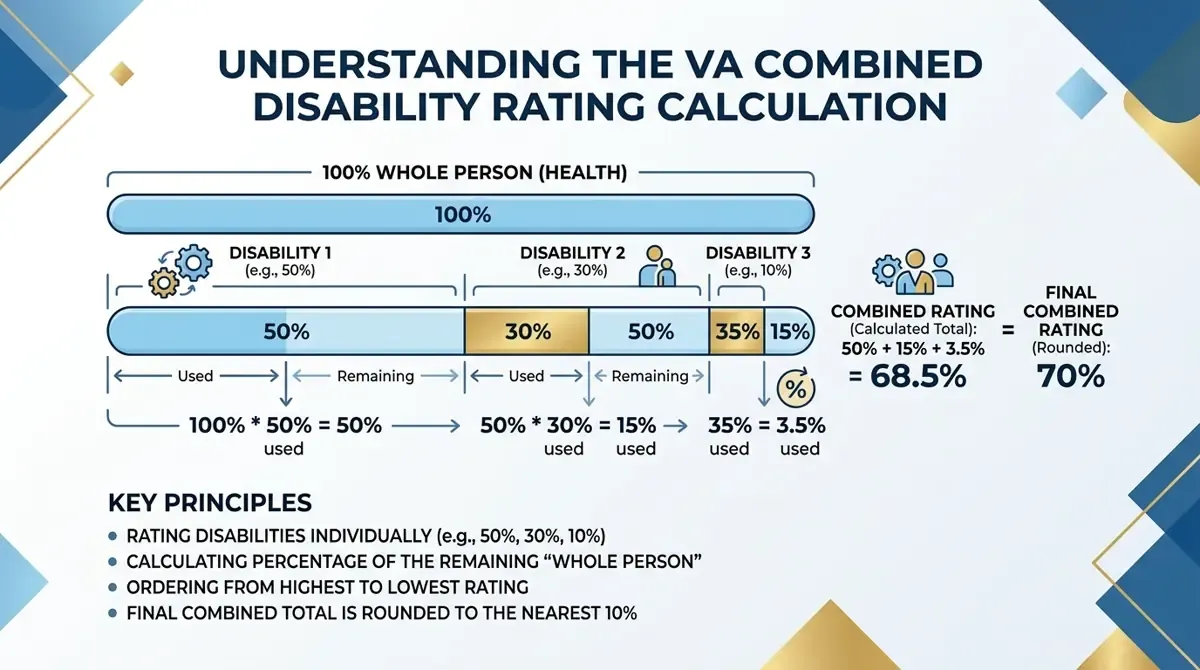
- Leaving out secondary conditions. Related conditions can significantly affect the final combined rating.
- Submitting disorganized evidence. Make it easy for the VA to see what supports each claimed condition.
- Minimizing symptoms at the C&P exam. Be accurate about pain, flare-ups, mental health symptoms, and functional limits.
- Ignoring the decision letter. The explanation tells you what to fix if the claim is denied or underrated.
For a deeper breakdown, use this checklist alongside other Veterans Educating Veterans resources on claim filing mistakes, appeals, and rating increases.
How Veterans Educating Veterans Helps With VA Claims
Veterans Educating Veterans is not a law firm and does not position itself as legal representation. The model is educational coaching: veterans teaching veterans how to understand the VA claim process, build stronger evidence, prepare for exams, and navigate the system with a clearer strategy.
Every VEV coach personally reached a 100% VA disability rating before joining the team. That veteran-to-veteran credibility matters because the coaches have lived the frustration of denials, confusing paperwork, and underdeveloped claims.
VEV’s Inner Circle Membership follows a structured process: strategy session, coach consultation, medical evaluation through a trusted doctor network, and educational guidance throughout the claims process. The company reports a 90% favorable decision rate, a 98% success rate for medical submission service, and an average $800/month increase for veterans it works with.
The model is simple:
You Only Pay When You Get Paid. No upfront fee. VEV is aligned with your outcome.
Frequently Asked Questions About Filing a VA Disability Claim
How do I file a VA disability claim for the first time?
Most veterans file a first-time VA disability claim online through VA.gov using VA Form 21-526EZ. Before filing, gather your DD214, service treatment records, current medical records, personal statements, buddy statements, and any nexus evidence connecting your condition to service.
What evidence do I need for a VA disability claim?
You generally need evidence of a current diagnosis, an in-service event or exposure, and a medical nexus connecting the current condition to service. Helpful evidence includes service treatment records, private medical records, VA treatment records, deployment records, buddy statements, personal statements, and medical opinions.
How long does a first VA disability claim take?
VA claim timelines vary. Many claims take several months, and complex claims can take longer if records, exams, or additional evidence are required. Filing a complete, well-organized claim from the start can help reduce avoidable delays.
Do I need a nexus letter for my first VA claim?
Not every first claim requires a private nexus letter, but many claims are denied because the connection between the current condition and service is unclear. A strong nexus letter can be especially useful for older injuries, secondary conditions, mental health claims, or claims with limited service treatment records.
What happens at a VA C&P exam?
At a C&P exam, a VA-contracted or VA examiner evaluates your claimed condition and documents findings for the rater. The examiner may ask about symptoms, review medical history, measure range of motion, or complete a mental health assessment. The exam is for evaluation, not treatment.
Can I file a VA claim without all my medical records?
You can file before every record is in hand, and the VA may help request federal records. But submitting a stronger evidence package up front usually improves clarity and reduces the risk of avoidable delays or denials.
What should I do if the VA denies my first claim?
Read the decision letter carefully and identify the reason for denial. If the VA says evidence is missing, a Supplemental Claim with new and relevant evidence may be appropriate. If the VA made an error based on evidence already submitted, Higher-Level Review may be a better fit.
Start With a Strategy, Not Guesswork
Your first VA disability claim sets the foundation for your benefits. File it with a clear strategy: know your conditions, gather the right evidence, explain your symptoms honestly, and understand what the VA needs to approve and rate each disability.
If you want veteran-to-veteran guidance, Veterans Educating Veterans can help you understand the process and identify the evidence gaps that may hurt your claim.
Get started with a strategy session and learn what steps make sense for your situation.