
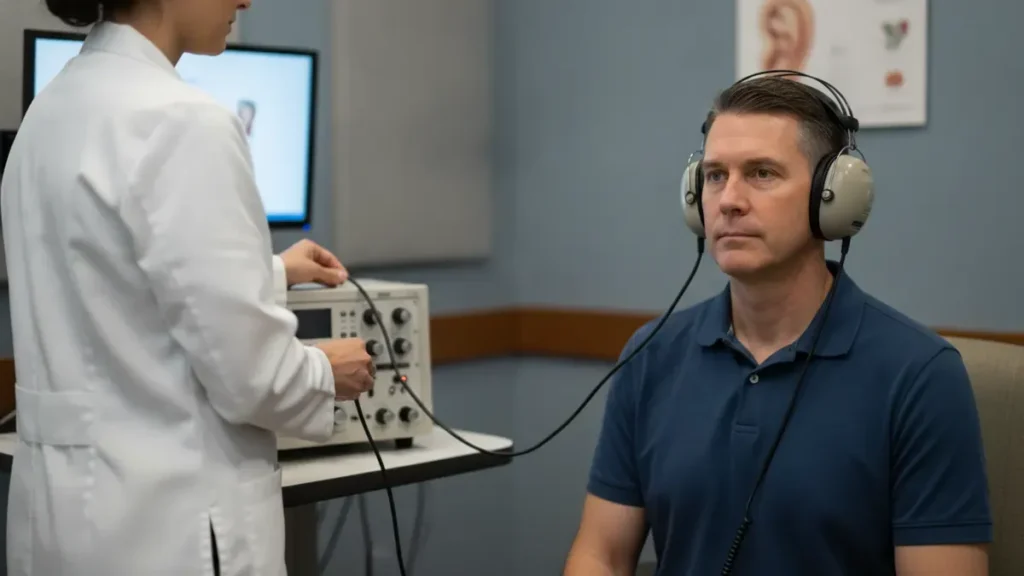
A hearing loss VA rating is based on audiology test results, not just how much trouble you have following conversations, hearing orders, or understanding speech in a noisy room.
If your hearing loss rating came back lower than expected, Veterans Educating Veterans can help you understand the evidence gap. Contact us to learn how our veteran-to-veteran coaching model works. You Only Pay When You Get Paid.
That is frustrating for a lot of veterans. You may know your hearing changed after weapons fire, flight lines, engine rooms, explosions, or years around heavy equipment. Your family may repeat themselves daily. You may miss words at work. But the VA rating schedule uses a specific formula. It looks at controlled speech discrimination scores, puretone thresholds, and a chart system that often produces lower ratings than real-world hearing problems feel like they should.
This guide explains how VA evaluates hearing loss, why tinnitus and hearing loss are not the same claim, what evidence matters, and how to prepare a stronger file before asking for an increase, filing a new claim, or challenging a low decision.
How does VA rate hearing loss?
VA rates hearing loss by applying certified audiology results to the hearing impairment tables in 38 CFR 4.85. The main inputs are your puretone threshold average and your Maryland CNC speech discrimination score for each ear.
In plain English, the VA does not ask, “Does this veteran struggle to hear?” and then pick a rating by judgment. The VA takes numbers from an approved hearing test, assigns each ear a Roman numeral level, then combines both ears on a rating table. That table can produce a noncompensable rating even when the veteran clearly has hearing problems.
The basic rating process usually looks like this:
- An audiologist tests hearing thresholds at key frequencies.
- The puretone thresholds are averaged for each ear.
- The audiologist performs Maryland CNC speech discrimination testing.
- VA assigns each ear a Roman numeral hearing level.
- VA combines both ears on Table VII to determine the final percentage.
The result can be 0 percent, 10 percent, or higher depending on the test pattern. Severe bilateral hearing loss can rate much higher, but many veterans with real hearing difficulty still receive 0 percent because the chart math is strict.
Why are hearing loss VA ratings often lower than veterans expect?
Hearing loss VA ratings are often low because the schedule is mechanical. Personal statements matter for service connection and functional impact, but the percentage usually turns on test scores from an approved audiology exam.
This is the part that catches veterans off guard. You can have credible noise exposure, a current diagnosis, and daily communication problems, then still receive 0 percent if your controlled test results do not meet a compensable level.
Common reasons ratings come back lower than expected include:
- Speech scores are still strong in a quiet test environment. Many veterans struggle most with background noise, but VA testing is controlled.
- One ear is worse than the other. The final rating combines both ears. A better ear can pull the combined result down.
- The exam does not reflect flare-ups or real-world communication problems. Hearing loss is tested differently than pain, fatigue, or mental health symptoms.
- Tinnitus is being confused with hearing loss. Ringing, buzzing, or roaring in the ears is rated separately from reduced hearing thresholds.
- The wrong test does not count. Private hearing tests may help medically, but VA rating evidence generally needs the required format and Maryland CNC speech testing.
A low rating does not automatically mean the VA ignored you. It often means the file needs better medical evidence, a clearer explanation of functional effects, or a separate look at related conditions.
What test results matter for a hearing loss VA rating?
The key test results for a hearing loss VA rating are puretone thresholds at 1000, 2000, 3000, and 4000 Hertz, plus Maryland CNC speech discrimination scores. VA uses those numbers to assign a hearing level for each ear.
The puretone average measures how loud sounds must be before you detect them at the tested frequencies. The speech discrimination score measures how well you recognize words under controlled conditions. Both matter because a veteran can hear tones but still struggle to understand speech, or may have threshold loss that is worse at certain frequencies.
| Evidence item | Why it matters | What to check |
|---|---|---|
| Puretone threshold test | Shows measured hearing loss by frequency | Confirm results include 1000, 2000, 3000, and 4000 Hertz |
| Maryland CNC word recognition | Feeds the VA speech discrimination score | Confirm the report names the Maryland CNC test |
| Audiologist credentials | VA requires proper testing standards | Confirm the exam was performed by a qualified audiologist |
| Functional impact statement | Explains real-world work and daily-life effects | Describe missed speech, safety issues, and communication problems |
For some veterans, an exceptional pattern of hearing impairment may apply under 38 CFR 4.86. This can matter when the puretone thresholds are especially severe in a pattern the standard table may not fully capture. Do not assume it applies. Have the results reviewed against the regulation.
How is hearing loss different from tinnitus?
Hearing loss is reduced ability to hear sound or understand speech. Tinnitus is the perception of ringing, buzzing, hissing, roaring, or similar noise when no outside sound is causing it. VA can treat them as separate disabilities.
This distinction matters because veterans often say “hearing problems” when they mean both conditions. The VA may grant tinnitus and deny hearing loss, or grant hearing loss at 0 percent while separately rating tinnitus. The evidence needed for each condition overlaps, but it is not identical.
Hearing loss evidence focuses on audiology thresholds and speech recognition. Tinnitus evidence often focuses on credible reports of persistent or recurrent ringing and the noise exposure history that supports service connection. If you need a deeper explanation, read our tinnitus VA rating guide.
Veterans should also watch for secondary issues. Hearing problems can affect communication, work performance, relationships, sleep, concentration, and mental health. Not every impact becomes a separate claim, but the file should not blur hearing loss, tinnitus, and secondary conditions into one vague statement.
What evidence helps support a hearing loss VA claim?
Strong hearing loss evidence connects three things: current hearing loss, in-service noise exposure or another service event, and the medical link between the two. For an increase, the evidence also needs to show the current severity with valid testing.
A veteran-friendly evidence checklist should include both medical and lay evidence. Medical evidence gives VA the rating numbers. Lay evidence helps explain onset, continuity, and daily impact in language the test report may not capture.
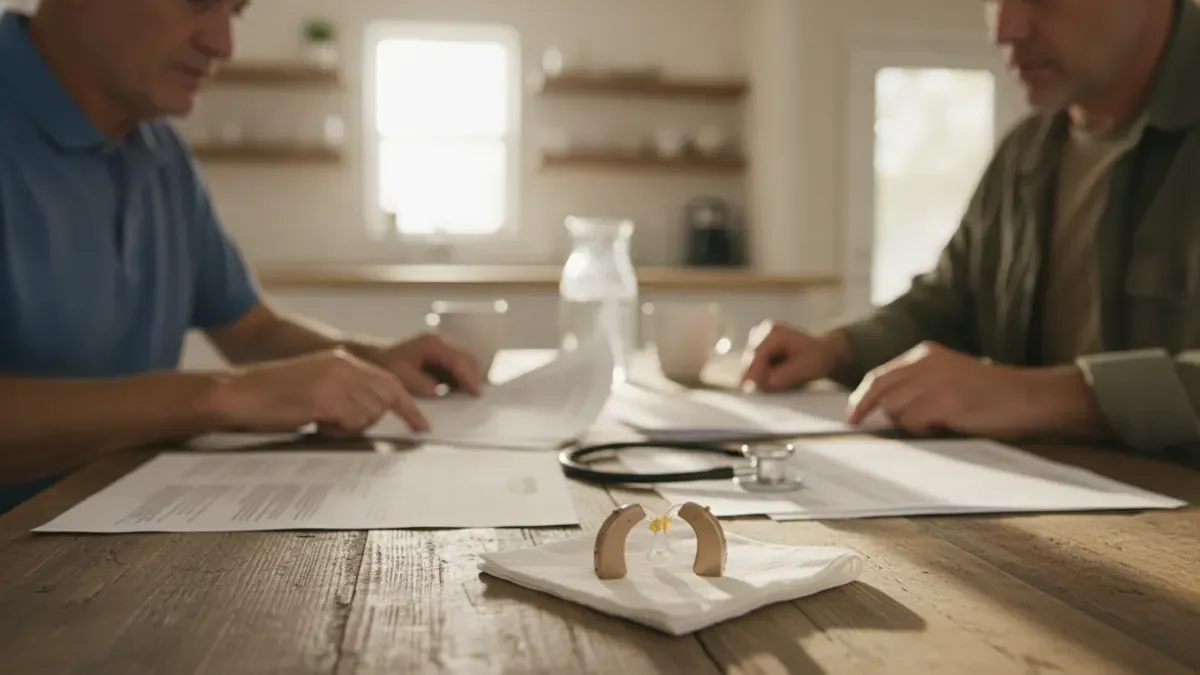
Hearing loss evidence checklist
- Current audiology exam showing puretone thresholds and speech discrimination.
- Report confirming Maryland CNC word recognition testing when available.
- Service records showing MOS, duties, deployments, flight line work, weapons exposure, vehicle noise, machinery, or blast exposure.
- Entrance and separation hearing tests, if available.
- Private audiology records, hearing aid records, or ENT notes.
- VA treatment records showing hearing complaints or hearing aid evaluation.
- Personal statement explaining when symptoms began and how they affect daily life.
- Buddy or spouse statement describing missed conversations, TV volume, safety concerns, or work communication problems.
- Nexus opinion when the connection between service and current hearing loss is disputed.
- Prior VA rating decision letters and C&P exam reports if you are appealing or seeking an increase.
The VA has its own evidence guidance for disability claims at VA.gov. Use that as a starting point, but do not stop there. Hearing loss claims rise or fall on details.
What should veterans say in a hearing loss statement?
A hearing loss statement should explain exposure, symptom history, and functional impact without exaggeration. The goal is to help VA understand what the audiology numbers mean in real life.
Keep it specific. Do not write a generic statement that says, “I have hearing loss from the military.” That may be true, but it does not teach the reviewer much. A stronger statement names the noise exposure, explains when the veteran first noticed problems, and gives examples of current limitations.
Useful details include:
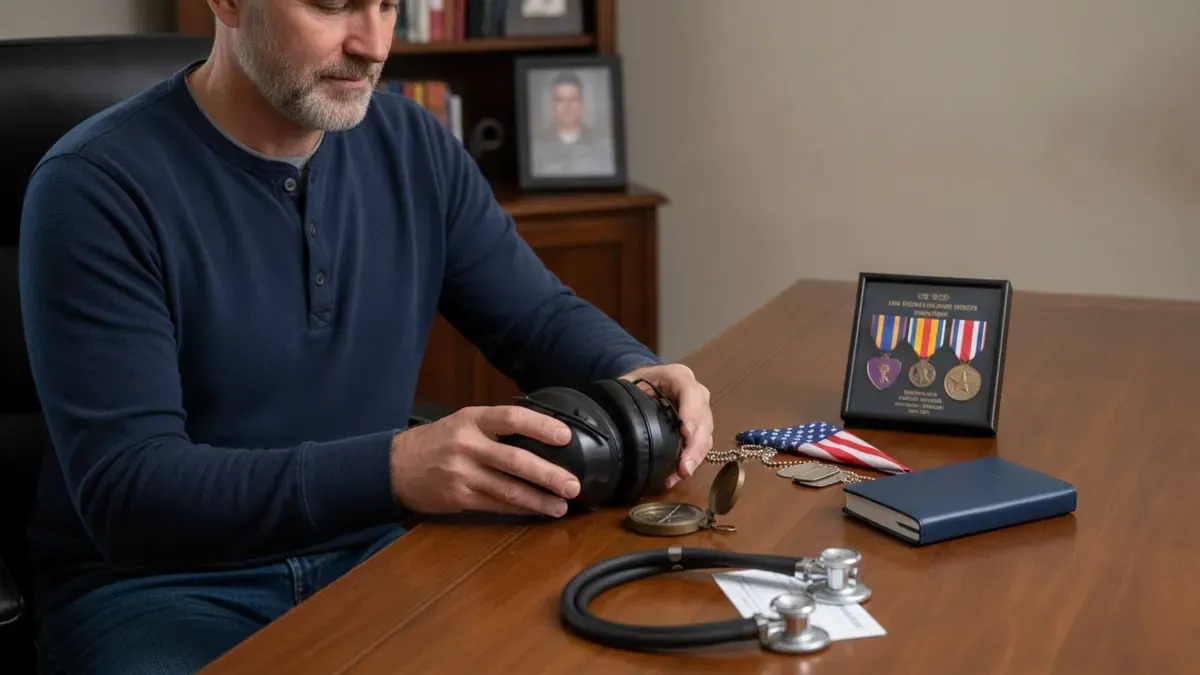
- Your MOS or duty role and the noise that came with it.
- Weapons systems, aircraft, vehicles, engines, generators, shipboard noise, or blast events.
- Whether hearing protection was unavailable, inconsistent, damaged, or ineffective.
- When you first noticed muffled hearing or trouble understanding speech.
- How often you ask people to repeat themselves.
- Safety problems, such as missing alarms, radios, instructions, or traffic sounds.
- Work impact, including missed instructions, phone difficulty, or communication errors.
- Family impact, including isolation, frustration, or avoiding group settings.
Stay accurate. Do not guess at medical conclusions. Describe what happened and how it affects you. Let the medical evidence handle diagnosis and measurement.
Not sure whether your file separates hearing loss, tinnitus, and secondary-condition evidence clearly? Talk with Veterans Educating Veterans. Our model is education and coaching, not legal representation, and our team helps veterans understand the VA process step by step.
When does a nexus letter matter for hearing loss?
A nexus letter matters when VA accepts that you have hearing loss but questions whether it is connected to military service. It can also help when there is a long gap between service and diagnosis, mixed civilian noise exposure, or an unclear medical record.
A good nexus opinion should not be a form letter. It should review relevant service records, noise exposure, medical history, audiology findings, and alternative explanations. The opinion should explain why the provider believes the hearing loss is at least as likely as not connected to service, if the evidence supports that conclusion.
If you are exploring this path, review our guide on how to get a nexus letter for a VA claim. A nexus letter is not magic. It works best when it fills a real evidence gap and fits the rest of the file.
Can hearing loss support secondary VA claims?
Hearing loss may contribute to secondary issues for some veterans, but secondary claims require evidence. You need more than a belief that one condition affected another. You need a current diagnosis and a medical link when the connection is not obvious.
For example, hearing loss and tinnitus may worsen communication strain, isolation, sleep disruption, or concentration problems. That does not mean every veteran with hearing loss has a separate secondary claim. It means the veteran should look carefully at the full medical picture and avoid leaving legitimate connected conditions undocumented.
Our secondary service connection guide explains the evidence structure in more detail. The key is sequence: identify the diagnosis, document the symptoms, then build the medical connection.
What should you review after a low hearing loss rating or denial?
After a low hearing loss rating or denial, review the decision letter, the C&P exam, and the evidence list before deciding your next step. The reason for the decision tells you what problem must be fixed.
Do not rush into another filing with the same evidence. If the VA denied service connection, you may need a stronger nexus or better service-noise documentation. If the VA granted service connection at 0 percent, you may need updated testing or proof that the rating exam missed important severity. If the VA ignored favorable evidence, the appeal path may matter.
Start with these review questions:
- Did VA concede hazardous noise exposure?
- Did the exam include Maryland CNC speech discrimination?
- Did the decision discuss both ears correctly?
- Did the VA separate tinnitus from hearing loss?
- Did the examiner address delayed-onset hearing loss or post-service noise exposure?
- Did the evidence list include your private audiology records?
- Did the decision explain why a compensable rating was not assigned?
- Is there evidence of an exceptional pattern under 38 CFR 4.86?
The right move depends on the defect. Some veterans need a Supplemental Claim with new and relevant evidence. Others may need a Higher-Level Review if the record was already strong but handled incorrectly. Do not choose the lane until you understand the reason for the result.
How Veterans Educating Veterans helps veterans understand the hearing loss claim process
Veterans Educating Veterans helps veterans learn the VA claims process through an education-first coaching model. We are not a law firm, and we do not replace your responsibility to understand your own file. We teach you how to navigate the evidence, strategy, and process with veteran-to-veteran support.
That matters with hearing loss because the claim can look simple from the outside and still fail on technical details. The difference between tinnitus, hearing loss, service connection, rating percentage, functional impact, and secondary conditions needs to be clear before the veteran files.
Our Inner Circle Membership is built around coaching, medical evidence review, and a structured process. Veterans work with fellow veterans who understand the frustration of low ratings, denied claims, and VA paperwork. The goal is not to guess. The goal is to organize the evidence and file with a strategy.
If you are stuck at a low hearing loss VA rating, dealing with a denial, or unsure how tinnitus fits your claim, contact Veterans Educating Veterans. You Only Pay When You Get Paid.
Frequently asked questions about hearing loss VA ratings
Can you get a 0 percent VA rating for hearing loss?
Yes. VA can grant service connection for hearing loss at 0 percent when the evidence shows the condition is related to service, but the audiology scores do not meet a compensable level under the rating tables.
Does tinnitus automatically prove hearing loss?
No. Tinnitus and hearing loss can come from similar noise exposure, but they are different conditions. Tinnitus is ringing or similar sound perception. Hearing loss is measured through audiology thresholds and speech recognition testing.
Can private hearing tests support a VA claim?
Private hearing tests can support the medical record, but VA rating decisions usually require specific testing standards, including Maryland CNC speech discrimination when used for rating. Review the report before relying on it as rating evidence.
What if my hearing is worse in real life than it was during the VA exam?
Document the functional impact and consider whether updated testing is needed. Controlled exam settings may not capture every real-world problem, but VA still applies the rating tables to valid audiology results.
Should I file hearing loss and tinnitus together?
Many veterans file both when both conditions exist, but the evidence should separate them clearly. Do not assume one diagnosis covers the other. Explain the symptoms, onset, and impact of each condition.
Can hearing loss lead to secondary conditions?
It can contribute to other problems for some veterans, but secondary service connection needs evidence. A current diagnosis and a medical link are usually necessary when claiming another condition as caused or aggravated by hearing loss.